Which MIDI Pack Should You Actually Buy? A Field Guide
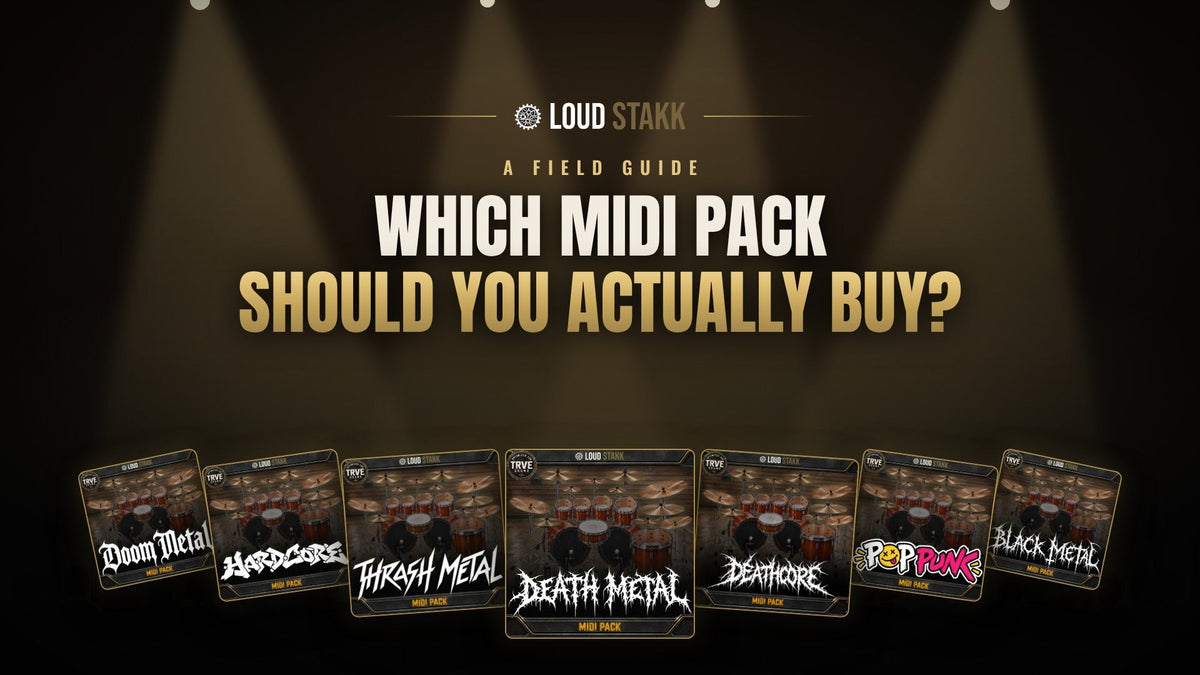
There are now 15 Loudstakk MIDI Packs. Which means the most common email I get isn't "how do I install this?"
It's: "Which one should I get?"
The honest answer is "the one for the music you're actually writing, not the music you wish you were writing." But that's not very helpful, so here's the long version, sorted by what kind of song is currently stuck on your hard drive.

But honestly, reading my opinions about drum grooves is a strange way to shop for drum grooves. So here's every pack. Click a cover, hit play, and skip the rest of this post if your ears already made the decision.
If you write Extreme Metal


Death Metal MIDI Pack: the obvious one, and obvious for a reason. Blasts, Double Kick, and the tempo changes that make your bassist quietly update his résumé.
Black Metal MIDI Pack: for when the riff is tremolo-picked, the production budget is a forest, and the drums need to be relentless without turning into a click track.
Black Metal MIDI Pack walkthrough.
Grindcore MIDI Pack: 104 grooves. Songs average about forty seconds, so technically that's an entire career's worth.
Deathcore MIDI Pack: the newest one, 101 grooves. Breakdowns, Slams, Blasts and Downtempo. If your riffs live on the lowest string and you're not ashamed of it, start here.
If you write classic or riff-first Metal


Thrash Metal MIDI Pack: Skank Beats, Gallops and the general feeling of a denim vest. Pairs suspiciously well with the Thrash 'Em All TRX for TRVE Rig.
Doom Metal MIDI Pack: for people who think "slow" is a compliment. Space between hits matters more than how many there are, and that's harder to program than it sounds.
Doom Metal MIDI Pack walkthrough.
Classic Rock MIDI Pack: not technically Metal, which makes it the most useful pack for Metal writers who keep accidentally writing Rock songs. We've all been there.
If you came up through Hardcore and Punk


Hardcore MIDI Pack: Two Step parts, mosh parts, and grooves that sound like a VFW hall at 9:40pm.
Hardcore MIDI Pack walkthrough.
Post Hardcore MIDI Pack: more dynamics, more feel changes, more opportunities for the singer to hold the mic stand sideways.
One Riff Challenge: Post Hardcore. Same riff, different drums.
Classic Punk MIDI Pack: fast, simple, slightly rude. The hardest thing to make sound right in a box, because it's so dependent on feel.
Pop Punk MIDI Pack: you know exactly who you are. No judgment. Some judgment.
Pop Punk MIDI Pack walkthrough. No judgment.
Ska Punk MIDI Pack: someone has to. I'm glad it's you.
The packs nobody buys first (but should)


Here's the thing about the genre packs: they get you a song's worth of verses and choruses. What usually makes a programmed drum track sound programmed is everything between the sections.
The other thing that gives it away is velocity. Here's what "programmed" usually looks like: every hit at full whack.

And here's a real groove from the Deathcore MIDI Pack. The differences are subtle, but they're what separate a drummer from a typewriter.

Metal Fills Vol. I MIDI Pack and Punk Fills Vol. I MIDI Pack: if your transitions currently consist of a crash on the one and a prayer, these will do more for your demos than another genre pack.
Metal & Punk Intros MIDI Pack: because the first four bars are where people decide whether to keep listening, and "four clicks and go" only works if you're the Ramones.
My actual recommendation for most people: one genre pack plus one fills pack. It covers far more of a real song than two genre packs would.
One more thing
All Loudstakk MIDI works in TRVE Drums, and it also drops into Superior Drummer, EZdrummer, Getgood Drums, Steven Slate Drums and Addictive Drums. There are install guides for each on the support blog. So whatever you're already using, you're covered.
Now go write the song.
-Ron D.Rock / Loudstakk